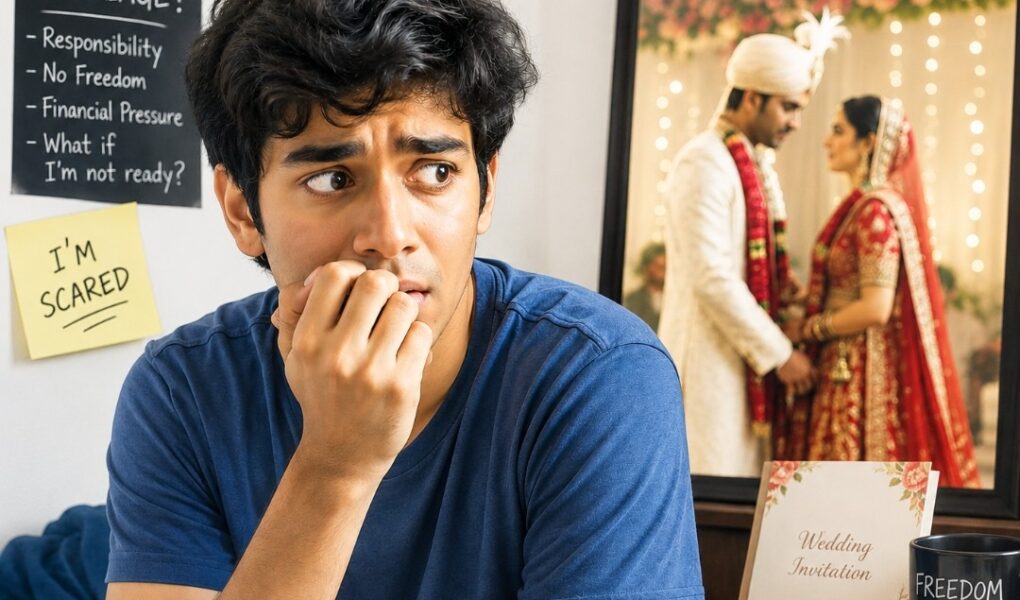
“Will I still be myself if I get married?” This question highlights the personal identity concerns that make the present generation hesitant about marriage.
Let’s avoid labelling the new generation as anti-marriage. Instead, they simply no longer view marriage as something to accept or enter by default. They pause, question, and wait—their hesitation stems from a combination of clarity, logic, and silent fear.
Unlike previous generations, marriage is now seen as a personal decision rather than a milestone, reflecting changing social attitudes.
The wedding calls began coming in, the day I completed my Master’s and turned 26 in 1984. My ‘Rishteydaars’ and ‘Padosis’ were more excited than my parents and kept giving sermons on the importance of marrying early. The usual dining-table criticism of food transformed into an effort to persuade me into marriage with each morsel I took.
As a member of the ‘obedient generation,’ I succumbed to peer pressure, which smothered my dreams of maintaining my bachelorhood and forced me to marry. The rest is history. Did my vulnerability and lack of foresight lead me to gamble away my life? The topic is debatable anyway.
Now, as a father, I confront a generation that isn’t necessarily afraid of commitment but is aware of the risks of disillusionment. They aren’t postponing marriage just to enjoy life; they are waiting until they feel secure enough to marry without risking losing themselves in the process. This wait might seem uncomfortable to us parents from the outside, but it embodies honesty and profound logic.
The primary causes of this Marital Quandary can be summarised as –
* Fear of identity crises — It stems from the effort required to build a career and establish a niche. In today’s world, having a societal identity and self-assessment are significant. Marriage often feels like a negotiation of personal identity, leading to questions like, “Will I still be me after marriage?”
* Sky-high emotional expectations—the youth are increasingly aware of intact yet unhappy marriages surrounding them. Having experienced silent compromises, emotional distance, and unspoken resentments within their families and older couples, they realise that simply ‘Adjusting’ is insufficient. They seek emotional and intelligent connection, genuine compatibility without compromises, unconditional respect, and a sense of safety in relationships. With divorce becoming more openly acknowledged than ever, and following court dramas and allegations, there is a growing sense of dread and ambiguity.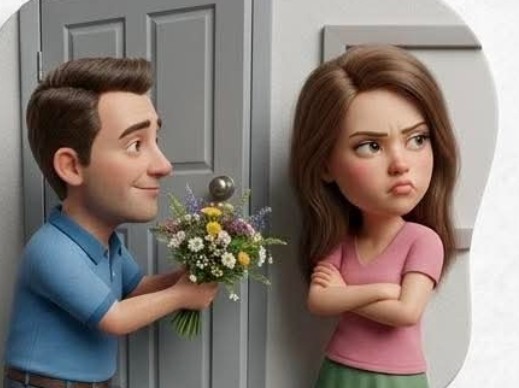
* Little certainty exists amid numerous choices – selecting a single shirt from hundreds can be challenging. More options often cause more confusion. As media, dating, and friendship apps grow and spread, perceptions become broader and less clear. The constant search for the best option fuels further confusion and misunderstandings.
* Career and a substantial bank balance hold more significance for girls than in the past. They aspire to be self-reliant and independent, earning a good income on their own. The security once provided by a spouse is no longer guaranteed; it is now optional. They prefer to pursue their dreams independently rather than rely on others to help them realise those dreams.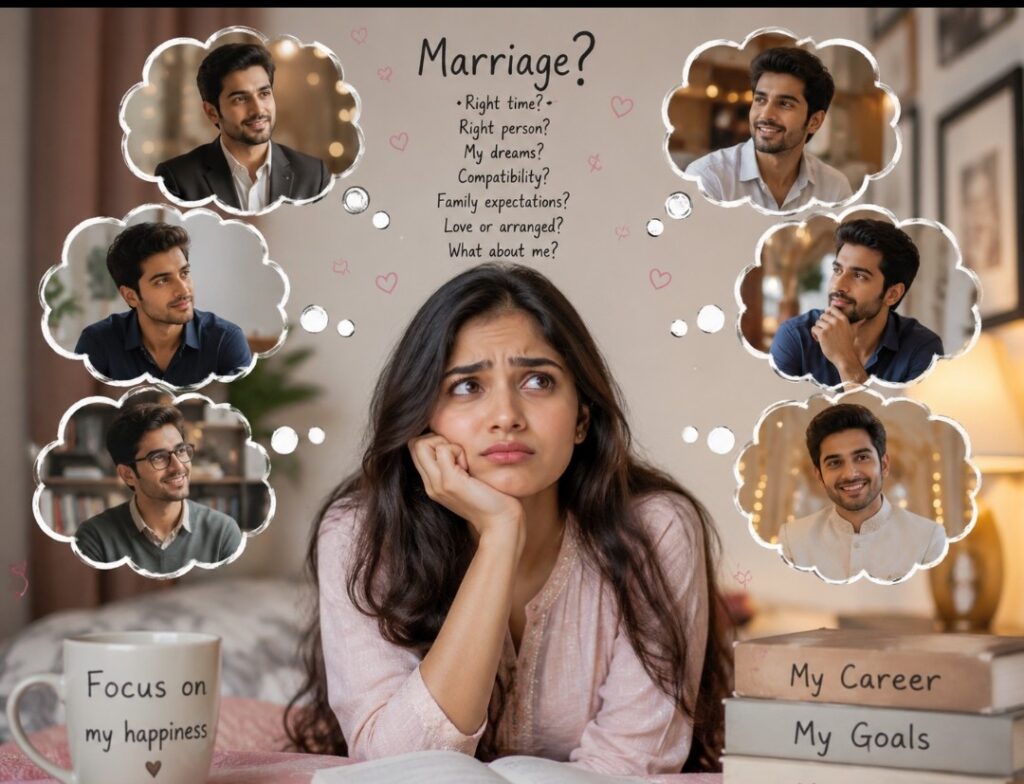
* Emotional fatigue – It has emerged as one of the most profound unseen pressures on modern marriages, discouraging young people from opting for marital bonds. It has changed the emotional climate. Earlier generations feared loneliness outside marriage, but now there is a concern about emotional suffocation within relationships and marriage. Furthermore, experiencing situationships, break-ups, and ambiguity in live-in relationships has compromised the sanctity of marriage.
So, are we moving towards a future where the intellectual class is diminishing because the elite, educated, and evolved refuse to believe in the institution of marriage? Or should we believe that, sustained by Hope and challenged by time, marriage is ultimately a delicate truth?
No matter the circumstance or destination, the desire for true companionship remains. We continue to seek someone with whom we can lower our defences and reveal our true selves.
The true challenge of modern marriage isn’t the absence of love or passion; rather, it’s mustering the emotional energy, patience, stillness, and solitude needed to maintain it.
“A leap called marriage – where certainty ends, and faith begins.”
………………………….



Xcellent
thanks dear.
Dear Doctor Anuj
Wow, I can’t help but agree to every single word and thought you have expressed in your candid revelation about MARRIAGE.
I was fortunate to be blessed with parents who did you not coerce me to get married because they had to face society. Now as a parent I give full liberty to my children to decide their future.
That’s wonderful. That’s why you are a good parent. We all share what we receive.
regards.
The blog ” I don’t want to get married! These modern hearts, with hesitant promises “, for sure describes marriage solemnisation in isolation. There was a time when marriages were solemnised with a great funfare. Weeks before marriage date, the close relatives would start pouring in and elderly people would take command of different activities likely to be held, under their control.
Now, with changing perception of marriage as an act of activity in life, the basic sancitity of marriage has changed altogether. One of friends’ daughter who is in Canada and is quite elderly now, age is not mentioned, is reluctant to marriage. Her parents are pursuing her time and again so that she settles down and get married. She tersely would reply again and again that once a suitable match meets she would marry. So far nothing has surfaced.
No doubt, nuptials are made in heaven and people do get a wonderful life partner. But when a young boy or a girl sees a no of divorce happening after a relationship of togetherness say after ten years or fifteen years, he or she is shattered and disturbed. Then, intermittently, cases of murders are heard , that too after a lapse of 3-5 years of married life, it is also demoralising. The young one’s ambition of marriage is shattered. So younger generation is now very calculative and scared with regards to marriage. They think many a times before stepping into the celebration of marriage.
My opinion on the issue is that parents and elders are required to counsel these young generation to be positive and try to understand the opinion and issues of your partner, instead of going by the hearsay. Mostly both husband and wife are in job nowadays since marriage. They have to understand the problems of each other. Secondly, a lot of thought is to be given for starting a family too. Nice narrative dear Dr Anuj.
Thanks a lot for the brilliant feedback. You are absolutely right about that. Our children are going through lots of emotional turmoil while deciding to get married. They need to be counselled rather than pushed. Parents have to change their point of view. A forced-upon relationship eventually dies a sad death.
regards.
Very well put Anuj. Today’s generation is more comfortable with the Live in concept- a marriage of convenience of sorts. But we the ‘Obedient generation’ find it a little uncomfortable to accept this concept till it is legalised either legally or by way of marriage ceremony.
Thanks a lot for your views. I fully agree with what you said.
regards