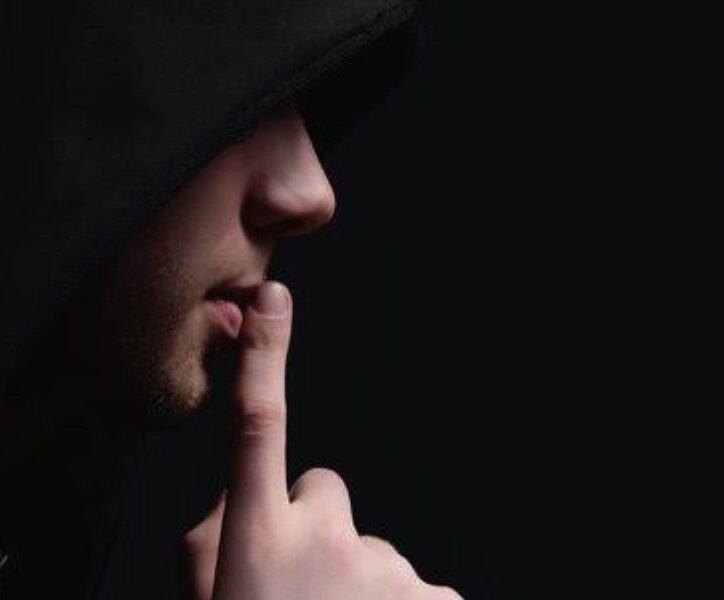
Non-verbal communication, a universal language that transcends spoken words, holds a hidden power. This phenomenon resonates universally, connecting us all across cultures and societies, making us part of a larger human experience.
The silent cues, such as a meaningful smile, wet eyes, a pause, or an eloquent gaze, possess the power to inspire, connect, and heal. But they can also inflict profound hurt, underscoring their potential for both good and ill. This duality underscores the weight of our actions and the responsibility in our communication.
True happiness, to a great extent, is leading a quiet life and creating an atmosphere of serenity and bliss. A genius prefers silence to speaking something which is not everything that should be spoken or revealed verbally. This underscores the need for and benefits of quiet reflection in promoting mental well-being.
For centuries, seekers of truth have wandered the mountain ranches and caves in pursuit of profound silence and bliss. Many, however, find their quest hindered by the cacophony within, which clouds their ability to meditate. Many great authors, poets, and painters have sought refuge in the hills and on the beaches, finding their creativity blossom in the serene embrace of nature.
A person surviving the hullabaloo of modern culture and society can achieve the same feat by choosing not to express their thoughts on every matter and opining on every trivial happening, or by staying silent.
Silence, a powerful tool, not only reduces stress and anxiety but also enhances concentration and creativity. It is a key contributor to self-esteem and personal development. Psychologists suggest that the brain seeks silence as a shield against emotional harm.
Power of Non-verbal Communication—
*Significance and true meaning—The reflection of true subconscious feelings doesn’t need words for expression. The tools for such expression are suggestive gestures, body language, eye contact and touch.
*Importance in daily affairs – A reassuring gesture and an affirmative expression can calm more than a thousand spoken words. The language of love begins with meaningful eye contact and physical expression, rather than speaking the words, ‘I love you’.
*Lingo of expressions – There are different cultural dimensions for a particular action, e.g. thumb raising can be interpreted differently in different beliefs and cultures.
*Professional impact – Several coaching and personality development classes train the students to improve their body language and assertiveness while facing an interview.
The moment a company’s medical representative walks into my office, much before he utters anything, I judge him and decide the fate of the company he represents. Influence comes from how one carries oneself; the impact of pronunciation and diction comes later.
*Language of emotions – In modern society, where spanking is forbidden, the expression of the eyes should communicate the dos and don’ts to the children. My mother had the most expressive eyes, and my entire childhood was spent trying to understand her gaze rather than her words. This is a clear example of how non-verbal communication, in this case, the language of emotions, can be a powerful and practical tool in human interaction.
Smart couples communicate in gestures and behave accordingly in social gatherings. Only their minds can decipher what society can’t, making them feel more connected and understood.
*Irony of silence – Barking at both ends usually escalates the situation to nasty dimensions. Silence at one end, however, has the power to diffuse the other person’s ire, de-escalating the argument. Silence is one of the most undervalued yet authoritative and significant forms of communication – “when words create noise, silence creates meaning.”
A politician barks loudly on the microphone, thinking that he becomes more powerful and authoritative by doing so. A gentleman chatters constantly in a social gathering, convinced that his words make sense and that he is being heard appropriately by the people around him. Spouses become loud and harsh, thinking they will eventually win the argument.
 Silence and soft speaking, however, remain the most incredible power, as they can calm the storms, heal the wounds, and convey what loud overtones fail to accomplish. This healing power of silence can bring comfort and peace in our lives.
With age, the non-verbal communication and silence become a choice, not a weakness. It’s a tool of wisdom, mental and emotional serenity and self-appraisal. There is a realisation of futility and meagreness in entering into any argument. The idea is to conserve verbal energy and utilise it in better means than to dissipate it unnecessarily. Most relationships, commodities, and situations are temporary, so why waste intellect on trivial matters? There comes a point of emotional maturity that prefers peace and shifts to acceptance rather than nurturing ego and mental rigidity.
Life is full of social provocations and atrocious situations where we lose control and our patience. Someone bangs your car, a domestic help breaks your expensive bone China vase, or your spouse enters into an unnecessary argument after a hard day’s work – all of these lead to wrath and anger.
Maturity in dealing with such a situation is to face the provocation with composure, showing your strength, not your vulnerability, by responding calmly.
‘Patience prevents outbursts of regretful words.’
Practising to take a brief pause before speaking makes words more thoughtful and has a profound impact.
“In love, silence can be more intimate than words. It is the gateway to divinity, where the eye expressions take over the profundity of flowery words. The one who understands silence goes deep, much deeper in love and relationships.”
*********************



Dear Doctor Anuj,
You are absolutely spot on about the power of silence and how effectively it works. You took me back in time when my mother taught me this power.
A soft spoken person draws more attention than the politician who barks, 😂.
Beautiful write up.
Thanks a lot dear for the appreciation. My mother also gave me enough lessons that help me to formulate my thoughts at this stage.
regards.
I totally agree with your views on power of silence and patience, but sometimes one’s silence irritates the other person.
You are right. The person who fails to understand the power of Silence may get irritated and confused.
regards
Candidly the power of silence many times overpowers thousands of words. Well structured article.
You are right about that. Silence has an enormous power that only the person who practices it, can feel it.
Regards
The blog “Non Verbal Communication-A power within” has been described explicitly and thoughtfully to signify a power of silence one can boast of. Of course, not in a literary sense but in a humble way.. It is normally seen and observed that one gets irritated and loud, the moment his perception is disagreed or rebutted.. It is a common phenomenon.. Of late, during our service period, it seen that people tend to assert our view point, albeit not necessarily it’s logically correct, to our fellow colleagues sitting in the auditorium to constantly keep on emphasising our perception.. We continue to speak louder and louder until others are covinced..It is not always true.At the same time, another colleague politely may tend to express either by his silence, gestures or by far by his terse statement.. That statement may tend to change the whole scenario of the discussion. It may so happen that the one who vehemently was so much assertive, may now have to think again on his view point. It is generally seen that those who speak little are liked by one and all. The moment he starts speaking, everyone become alert and attentive and try to listen to him.
Silence or terse sentences are like healing power or therapy one can have in his armoury. In every walk of life, it’s always better to either keep silent or speak less so as to disseminate an impression amongst that he is a wise man. Whenever he will speak, superfluous or undesirable statements or concepts will not come out. Only relevant and logical thoughts will percolate down the line.. We have seen that though great eminent speakers like Dr Sarvapalli Radha Krishnan, Dr APJ Abdul kalam and Pandit Nehru were gems of oratary skills, nevertheless, silence was a special trait in their persona. No where in the history it’s reported that they resorted to arguements with opponents either by shouting or speaking louder to silence them. As rightly said patience prevents outbursts of regretful words. We should not repent after shouting or speaking louder before others. If we are not aware of facts under discussion, it’s better to keep quite and listen to others, instead of shouting or arguing in endless discussions..Too good Dr Anuj… Thoughtful narrative that deserves to be appreciated..
I thoroughly appreciate your perspective and your logic. You have beautifully penned your thoughts. This is true — patience prevents outbursts of regretful words. We see it all the time in our affairs.
Thanks for your feedback
regards