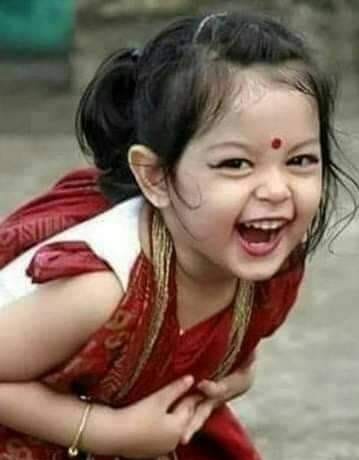
The feeling of lost childhood and the loss of the essence of living share a common emotion and meaning. They are tied to unprocessed memories, unmet needs, or struggles to adapt to life’s complexities.
Life’s hardships and responsibilities replace the times of innocence, naivety and joy. The weight of the present overshadows the lightness of childhood days.
Losing the essence of living instigates a disconnect with oneself. The purpose, joy, and beauty of small moments become distant. This disconnect might stem from unmet expectations, a monotonous mundane roster, or emotional fatigue.
Loss of childhood and loss of the essence of living is not a permanent state, though heavy emotionally.
At times, we must ponder what aspects of childhood we feel are missing—don’t we now experience the joy, creativity, and freedom we did as children? Or did we grow up too quickly because of struggles and skirmishes? Acknowledging these experiences can be healing. It is not about lodging on the past but understanding its profound impact on our present. By accepting and processing these experiences, we can heal and reconnect with our inner child.
Reconnecting with lost childhood is a journey of joy and inspiration. We can maintain a strong connection with our inner child by engaging in activities that make us feel free, rejuvenated, playful, and curious. These activities can be as simple as playing a game, exploring a new hobby, or indulging in creative pursuits. They can revive our spirits and fill our lives with joy.
Overloading the mind and heart makes life dull and mundane. We need to catch up on what truly brings meaning or satisfaction. We should actively reflect on the purpose and meaning attached to our lives.
The human growth process and evolution leave so much behind in life. No loss can match the desolation and devastation of a lost childhood. A billionaire or a pauper may have a sea difference in their lives, but they share one crucial thing—childhood’s ‘bindaas’ laughter and the naive sparkle in the naughty eyes.
My domestic help has four children– two to ten years old. They create havoc, performing pranks and noisy chores outside my clinic in the evening. Their innocent eyes and cherubic smile mellow me down, and I gulp my anger and frustration. I don’t want to scold them and destroy their belief in the world’s goodness. They are uncut diamonds in pursuit of their sheen, and their innocence and naivety make them fearless. The world may have seven wonders, but I see seven million in those glistening eyes.
I see my lost childhood in those busybodies! Like a mirror, my soul leaps out and reflects my kindergarten face. Those moments instigate me to relive my past and feel a few things again without amending them. I crave the virtue of never understanding rejection, never seeing denial, and being immune to the agony of limitless, unrequited love.
“Be happy for no reason, like a child. If you are happy for a reason, you are in trouble because that reason can be taken from you”. DEEPAK CHOPRA.
As children, we emulated all film stars, wanted to marry the most beautiful film diva, own an aeroplane or yacht, or drive a fancy car. We believed in everything without logic or understanding, no matter what we saw or heard. Friends could load us on a flight to the moon, describe the front seat girl’s physical details, prove the adjacent rundown building to be haunted by ghosts, and so on. “Childhood is about believing in everything and knowing nothing at all.”
As we journey through life, we come to a profound realisation. The broken toys, lost pencils, sharpeners, and stolen stamps and coins of our childhood were, in many ways, much better than the broken hearts, betrayals, jilted emotions, career frustrations, lost friends, and shelved relationships of adulthood. A child’s innocence teaches us to believe in everything without logic or understanding and to embrace life with a heart full of joy and a spirit ready to explore. It’s a lesson in simplicity’s beauty and belief’s power.
We visit the town’s prestigious clubs, attend mundane and superfluous parties to slog through a couple of single malts, play silly, drab games of Tambola and cards and tolerate the gossipy, toxic people. In bed, the soul questions – Hey, have you seen your childhood?– You seem to have lost it somewhere – Do you miss it?
The child has grown, the dream is gone, and life has metamorphosed into a robot, accomplishing a stipulated goal and living out false emotions. We all choose to become ‘Comfortably Numb’.
By putting up a worldly sham front, we die inside. Keeping a child alive is not being immature; it’s about embracing life with a heart full of joy and a spirit ready to explore, and losing it is like losing the soul.
I have tried to keep my inside child alive –
–I hear the friend’s loud call to play ‘I Spy’.
–I feel the slap on my back during the ‘Run Chase’.
–I endure the pain of tetanus shots and mercurochrome lotion after getting bruised in the field.
–I flutter at the sight of the smiling girls.
— I cry and sigh at the loss of the street cricket tournament.
While visiting my old house, I realised it was not the house I was missing – my childhood was deeply missed.
A piece of advice — A museum should be curated to display all ancient childhood games, like ‘Gullee Danda’, ‘Kanche’, ‘Patang’, etc. The present generation is involved in keyboard gimmicks without an outdoor concept and needs profound lessons about these games to understand the essence of the soul behind them.
The carefree urchins at the red light crossing, while asking for alms, teach us three things —
*There is no reason – just be happy.
*We are so busy – from morning till evening we chase cars to get some charity.
* We demand what we desire without any hitch or glitch.
We see these ill-clad, messy, busy kids laughing and giggling as if they were the world’s happiest. Here, we force a smile, shelve demands, and stay busy without business. What a life-changer!
Childhood is a princely state where—
–There is no death.
— Dreams are born without planning or timing.
–The smiles, ideas and visions live on.
— Life span is not from birth to a certain age; it could be extended to when one grows and dies a natural death.
The soul’s essence is – Letting the inner child survive, not letting it die . . . Learning the art of graduating without losing the inner baby. We gain seamless clarity because the child never develops filters that prevent us from seeing things we don’t imagine or visualise.
“The innocence of children is their wisdom, the simplicity of children is their egolessness – the freshness of the child is the freshness of your consciousness, which always remains young.” RAJNEESH.
………………………………

Leave a comment